St Moling’s Pilgrim’s Route
The Pilgrim Route is associated with the early 7th century ecclesiastical complex situated on high ground above the east bank of the river Barrow in south Co. Carlow founded by St. Moling (614 – 696). The “pilgrimage†is performed in supplication to the saint, seeking the miraculous curative power o
| Location | St Mullins, Co. Carlow |
|---|---|
| Categories | Social practices, rituals and festive events、Oral traditions and expressions, including language |
| Keywords | Religion, pilgrimage |
| Contact organisation | SMART (St. Mullins Amenity & Recreational Tourism) Group Lt |
Background information
The Pilgrim Route is associated with the early 7th century ecclesiastical complex situated on high ground above the east bank of the river Barrow in south Co. Carlow founded by St. Moling (614 – 696). The “pilgrimage†is performed in supplication to the saint, seeking the miraculous curative power of the water from the ancient well.
Ritual Observance of the Pilgrimage:
A slightly different route for this pilgrimage was well documented at the time of the Black Death (1348) by a Franciscan friar, John Clynn of Kilkenny when he described the hordes of people who thronged to St. Mullins in search of a cure or protection from plague at that time.
Practice and practitioners
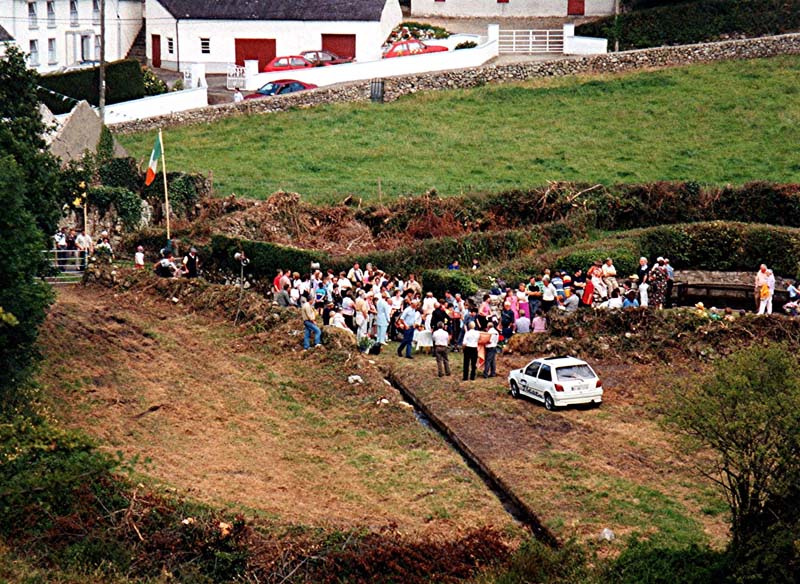
The pilgrimage as originated by St. Moling when he consecrated his millrace on the Feast of St. James (July 25), c. 650 has been modified through the centuries. On that day St. Moling promised “healing of mind and body†to all who made the pilgrimage and waded the water “against the flowâ€. Oral and written tradition has insured that this promise has never been forgotten by the people of St. Mullins and district.
During the 1970’s to the mid 1990’s wooden footbridges across the river Aughvaud and the 18th C millrace allowed pilgrims to pass to the higher ground of the monastic site. These were dilapidated and removed for reasons of safety and complicated land ownership in the mid 1990’s. Since then doing the full pilgrimage has been curtailed. Many people still do a modified version of the pilgrimage centered on the Blessed well and the monastic ruins.
Many local people continue to do this pilgrimage, as do many people with St. Mullins connections living abroad. It is still done to petition St. Moling for cures for various sicknesses, cures for ailments of the head for safe-keeping and in thanksgiving. Water from St. Moling’s well is requested all over the world by the St. Mullins diaspora and is regularly taken to local hospitals, so strong is the belief in the cure still.
Development, transmission and safeguarding
The authenticity of the ritual is not in doubt due to the extensive evidence in the medieval literature and in the local archaeology. It has been a living tradition for a thousand years as a continuing and evolving practice embedded in the local community. This tradition is reinforced every year as the feast day of St. Moling, (June 17), and the annual Pattern Day, (Sunday nearest July 25) are celebrated in St. Mullins. The pilgrimage is kept alive by the many emigrants and people with St. Mullins connections who regularly return to take part in the traditional pilgrimage. Young children learn about the tradition by participating in a special open-air
children’s Mass for the Feast of St. Moling and preparing for and attending the annual Pattern each year.
The community has persisted in the belief of the curative powers to be obtained from doing the pilgrimage ritual. They took on the role of custodians of the traditional culture and continue to act in this role. For the past twenty years, SMART Ltd has availed of every opportunity to highlight and promote the pilgrimage. This included publication of a Heritage Trail Booklet (1996), guided walks of the route for Heritage Week, explanation of the customs and rituals for those attending the Gathering (2013), the Ireland-Newfoundland Connections visit (2014), various historical society tours. A brochure on St. Mullins by Archaeology Ireland, Heritage Guide No.5 was published in 1999. A leaflet entitled St. Moling’s Millrace – An extraordinary heritage in South Carlow (2013), was compiled by Rev. Fr. E. Aughney, P.P. St. Mullins.
SMART (St. Mullins Amenity & Recreational Tourism) Group Ltd